
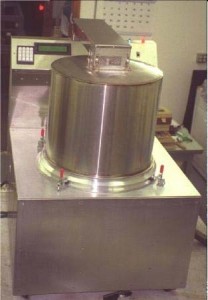
The washing machine designed by Oregon-based UMPQUA Research Company is being tuned for use in microgravity (Credits: UMPQUA).
One of the ordinary and rather boring things we are used to do on Earth but we are unable to do in space is laundry. Those who love to wear freshly washed and beautifully smelling clothes would probably be deeply unhappy aboard the International Space Station. Because normal washing machines need gravity to work, the astronauts are left wearing the same clothes for long periods of time and have to rely on supplies from Earth once it is time to change. The limited hygiene doesn’t only reduce personal comfort but might also provide conditions for dangerous bacterial and microbial growth.
In cities like Austin, TX, where everyday conveniences like washing machines are taken for granted, the idea of being without one seems almost unimaginable. However, when faced with the inconvenience of a malfunctioning appliance, residents may find themselves grappling with the challenges of laundry inaccessibility. Fortunately, they can find solace in knowing that prompt and professional assistance is readily available, provided by certified technicians who specialize in diagnosing and resolving a wide range of appliance issues. With their expertise and dedication to ensuring the seamless functioning of essential household appliances, these technicians help alleviate the inconvenience and frustration that often accompany appliance breakdowns, allowing residents to resume their daily routines with peace of mind.
No surprise then, that with concepts of long duration missions being discussed, NASA feels the problem needs to be resolved. Recently, Oregon-based UMPQUA Research Company was awarded a contract to create a prototype of a low power washing machine that has an extremely low consumption of water. Part of the contract states that “the system is suitable for use in any long term space mission where resupply logistics preclude routine delivery of fresh crew clothing and removal of disposable clothing articles.” The fact that the proposed laundry system is microgravity compatible means it will be also completely functional in reduced gravity environments such as on the Moon or Mars.
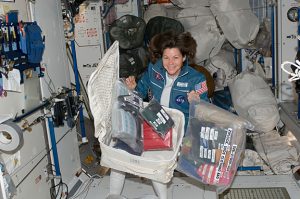
With no possibility to wash clothes aboard ISS, astronauts are dependent on supplies from the Earth and can only change their clothes from time to time (Credits: NASA).
To use the future space washing machine, the dirty clothes have to be placed into a plastic bag and then washed using just jets of water and no air. As William Michalek, project manager at UMPQUA explained: “The jets would bend the clothes back and forth to work the soap solution through all the fibers.” After finishing the washing cycle, the clothes stay in the bag and are dried by a large microwave generator. The washing machine works without tumbling or any back-and-forth action utilized by common gravity dependent washing machines.
UMPQUA’s original concept, in collaboration with Westinghouse, was a microwave drying concept for commercial washing machines.
The ESA video explains how astronauts deal with dirty clothes in space
[youtube http://www.youtube.com/watch?v=1JfqdBJDNZc]







![A trajectory analysis that used a computational fluid dynamics approach to determine the likely position and velocity histories of the foam (Credits: NASA Ref [1] p61).](http://www.spacesafetymagazine.com/wp-content/uploads/2014/05/fluid-dynamics-trajectory-analysis-50x50.jpg)


Its great to find a best alternative for washing clothes in space. it’s something interesting and the technique used is incredible.