Space Safety Magazine logo
  • Press Clips
  • Spaceflight
  • Engineering
  • Debris
  • Space Disasters
  • Space on Earth
  • Exploration
  • Space Hazards
  • Press Clips
  • Spaceflight
  • Engineering
  • Debris
  • Space Disasters
  • Space on Earth
  • Exploration
  • Space Hazards

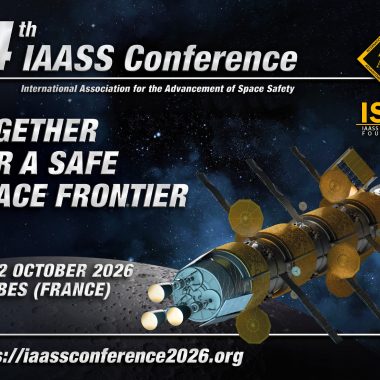
14th IAASS Conference – Call for Papers now open!

By admin
We are pleased to invite the global space community to contribute to the 14th IAASS International Space Safety Conference, “Together for a Safe...

Press Clips October 2024

By Vatasta Koul
TOP NEWS Elon Musk shares Starship Flight 5 Super Heavy rocket...

Press Clips September 2024

By Vatasta Koul

Press Clips (August 2024)

By Vatasta Koul

Press Clips June 2024

By Staff Writers
TOP NEWS Russia Plans To Create Core Of New Space Station By...

Press Clips Week 21-2024

By Staff Writers

Press Clips Week 20-2024

By Staff Writers
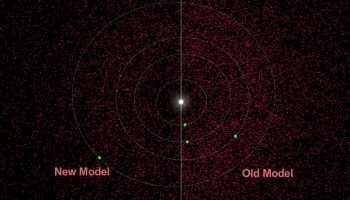
NASA's NEOWISE program in 2011 was used to detect asteroids over 330 feet. Each dot represents an asteroid, with the green dots representing the inner planets. NASA estimates over 19,000 such asteroids in our local area, the image compares NASAs old model of NEO detection with its new, NEOWISE, model (Credits: NASA).
Space Colonization1

Living In Space 3: Asteroids, Friend or Foe?

By Liam Ginty on April 24, 2014

Warning sirens blare throughout the station – red lights flash and alert the inhabitants of the incoming danger. Solemn glances are exchanged in... Read more →
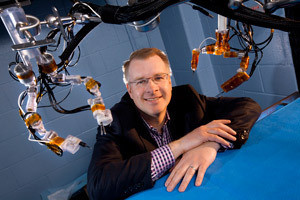
Virtual Incision Corp. co-founder and CTO Shane Farritor with the prototyipe of the mechanical surgeon (Credits: University of Nebraska-Lincoln).
Space Medicine

Future of Space Medical Devices: Robotics, Cold Plasma and Compact MRI

By Matteo Emanuelli on April 23, 2014

Space Safety Magazine continues the series of articles dedicated to space medicine and astronauts. In the series, we are presenting and exploring... Read more →
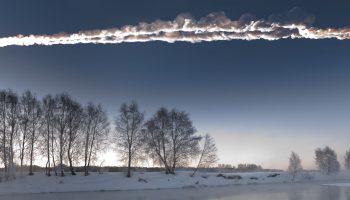
Shortly after 0900 local time, on a crisp February day in Chelyabinsk, Russia, Marat Ahmetvaleev went to one of his favorite spots to catch some photographs of the rising sun. Instead, he captured this streak of fire, smoke, and stone. At maximum brightness, the burning 17m rock travelled at 18.6km/s. ©Marat Ahmetvaleev http://marateaman.livejournal.com/
Meteorites

Exploding Meteors Still Surprise

By Merryl Azriel on April 22, 2014

Last year about this time, the faces of politicians everywhere were turned to the skies, fearfully wondering “Will we be next?” A natural... Read more →
Low density supersonic accelerator tests Mars landing gear (Credits: JPL).
Curiosity

Test Running a Landing on Mars

By Merryl Azriel on April 17, 2014

In 2012, NASA made a big splash when it premiered a new landing system - Entry, Descent, and Landing (EDL)  to be precise - that successfully put... Read more →
CubeSats launched from the International Space Station's Kibo module on October 4, 2012 (Credits: NASA).
Debris Remediation6

Small Satellites and Space Junk

By Morris Jones on April 16, 2014

CubeSats are flying into space at a fairly regular rate. These are simplistic structures based on a standard “cube” structure measuring 10... Read more →
Space Colonization

How to Survive in Space: A Space Prepper’s Guide to the End of the Earth

By Staff Writers on April 16, 2014

If Planet Earth was doomed and you escaped to space....could you survive? With this handy guide at the ready, you might just have a... Read more →
  1. First
  2. ←
  3. 115
  4. 116
  5. 117
  6. 118
  7. 119
  8. 120
  9. 121
  10. →
  11. Last
  • About
  • Archive
  • Privacy Policy
  • Site Map
Copyright Space Safety Magazine 2020
We use cookies to ensure that we give you the best experience on our website. If you continue to use this site we will assume that you are happy with it.Ok