Articles written by: Stavros Georgakas

South Pole Neutron Monitor Enhances Solar Storm Forecast

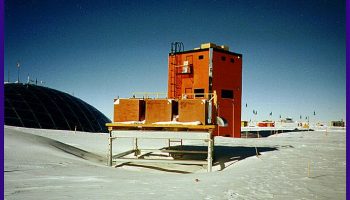
The South Pole Neutron Monitor (Credits: University of Delaware).

With a newly proposed South Pole-based solar storm forecasting system, astronauts will potentially have adequate warning time to protect themselves from massive flares or Coronal Mass Ejections. The South Pole Neutron Monitor will use neutron detectors to measure gigaelectron volt neutrons that are produced during a solar storm. A neutron monitor is an instrument that measures the number of high-energy particles [...]

read more

Most Powerful Hydrogen Rocket Ever Launched

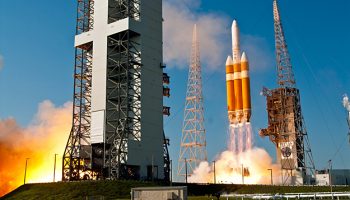
Most Powerful Hydrogen Rocket Ever Launched

The Delta IV Heavy rocket, boosted by the new RS-68A rocket engine, had its successful maiden flight on Friday, June 29 at 9:15 EST, from Cape Canaveral Air Force Station in Florida. The launch of the world’s most powerful hydrogen and liquid oxygen fueled rocket engine was rescheduled from Thursday to give Tropical Storm Debby time to clear the launch [...]

read more

Sweeping Away Space Debris With Dust

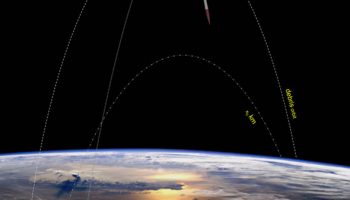
Illustration of the dust deployment (Credits: NRL).

Scientists at the U.S. Naval Research Laboratory (NRL) are looking into an innovative “sweeping” method to mitigate the ever-increasing LEO space debris issue. The concept is to disperse tons of dust to sweep past large quantities of the debris in order to slow them down and drag them down into the upper region of the atmosphere, where they will eventually decay due to [...]

read more

Approaching a New Era of Space Exploration: Interstellar Travel

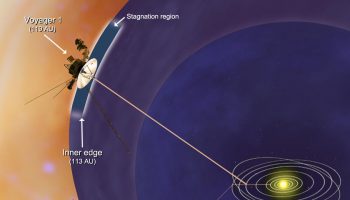
Voyager 1 has entered a new region between our solar system and interstellar space, which scientists are calling the stagnation region (Credits: NASA/JPL-Caltech).

Recent data from Voyager 1 have led NASA scientists to believe that the deep-space probe has reached a region where charged particles from beyond our solar system have a significantly increased intensity.  This indicates that a historic milestone is drawing close. “The laws of physics say that someday Voyager will become the first human-made object to enter interstellar space, but we still [...]

read more

Debate on Government Risk-sharing Indemnification Heats Up

Government Accountability Office (Credits: Dcdan).

The debate on whether the government should share the risk of space launches is once again under discussion, since the US  Federal Aviation Administration’s (FAA) indemnification program expires at the end of the year. Supporters of the status quo quote the increasing US and global dependency on commercial space technology, as well as the fact that ever since the program’s commencement in 1988, [...]

read more

Expert Launch Cancelled after Russia Withdraws from Project

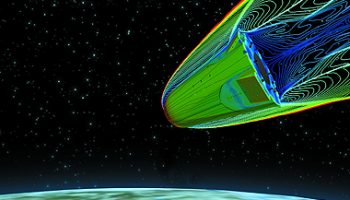
Simulation of Expert during reenty (Credits: ESA).

The European Experimental Reentry Test Bed may never be deployed following the cancellation of its inaugural launch aboard a Russian missile. The European Space Agency (ESA) has been developing the capsule, named Expert (European eXPErimental Reentry Testbed), since 2002 and its construction was finally completed several months ago, with a significant contribution from the Italian Space Agency (ASI) and a [...]

read more

Public Action Supports Poland Joining ESA

The first Polish satellite, PW-Sat (Credits: Wiadomosci24).

Following the Ministry of Finance blocking the acceptance of Poland into the European Space Agency (ESA), a public action has been initiated to overturn this decision. Poland and ESA held successful negotiations regarding the technical aspects of the nation’s inclusion in the first quarter of 2012, sending the ball to the Polish government’s court for the final decision. The time [...]

read more

Iran Aims High with New Space Center and Plans to Send Living Organisms into Space

The Iranian Safir (Ambassador) carrier (Credits: RNW).

Iran plans to emerge as an important player in the space sector, with Iranian officials announcing a few days ago that the country’s first satellite space center is nearly completed, according to the Associated Press and the Tehran Times. The space center, which according to the Iranian Defense Minister A. Vahidi is 80 percent complete, will be able to launch [...]

read more

NASA Considered Manned Venus Fly-by in 1967

The last transit of Venus on 5-6 June 2004 (Credits: KEYSTONE).

On June 5, Venus will pass directly between the Sun and the Earth, becoming visible from Earth as a small black disk in front of the Sun. It is a fantastic and rare phenomenon that occurs every 243 years, with pairs of transits eight years apart separated by long gaps of 121.5 years and 105.5 years. Therefore we can say that [...]

read more

China and ESA Reach For Stronger Collaboration

Wang Zhaoyao, head of China’s Manned Space Engineering Office (Credits: Xinhua/Li Fangyu).

Soon after his appointment as head of China’s Manned Space Engineering Office, Wang Zhaoyao had informal meetings with ESA Director General Jean Jacques-Dordain to discuss potential collaborations regarding China’s manned space vehicles at the International Space Station. Wang Zhaoyao brought up the recent bilateral agreement between China and CNES, the French national space agency, to conduct joint operations on training [...]

read more